Charting the Rise of Instant Withdrawal Technologies in Mobile Roulette
Gisela Jung · Jul 8, 2026
Charting the Rise of Instant Withdrawal Technologies in Mobile Roulette
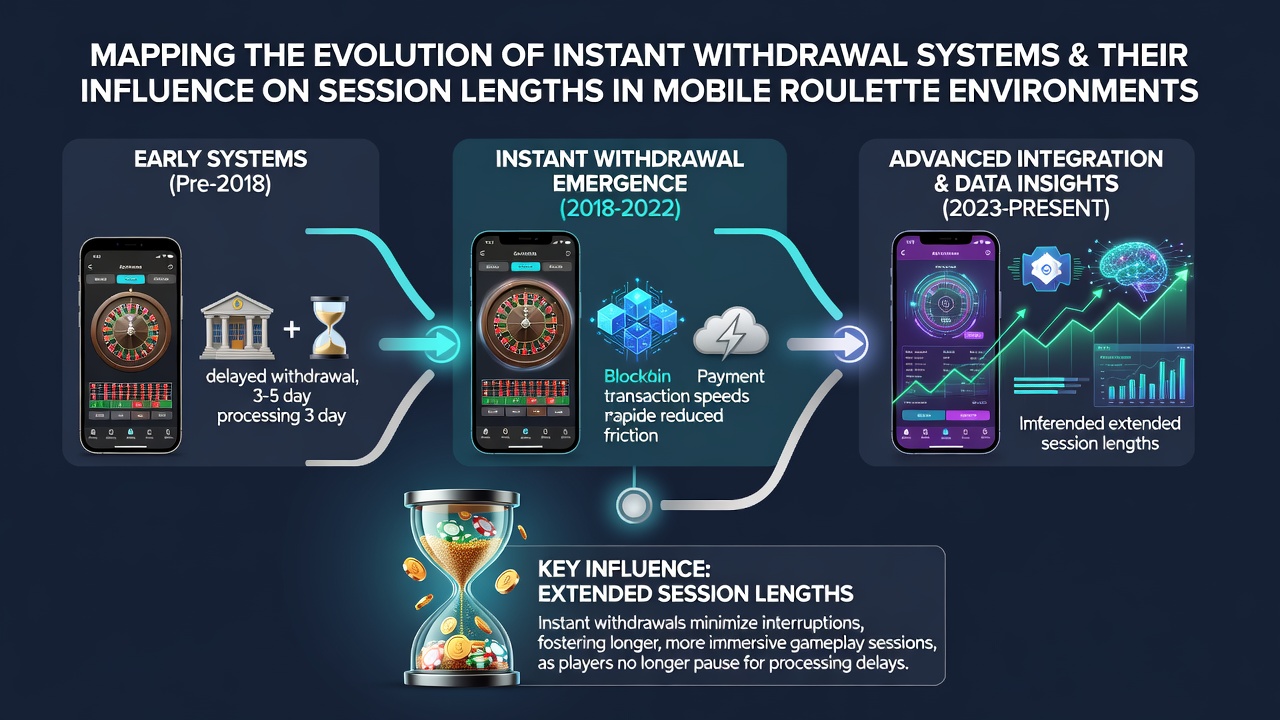
Instant withdrawal systems began appearing in mobile gambling platforms during the early 2010s as operators integrated e-wallet services that allowed players to access funds without the multi-day delays common in traditional banking transfers. These systems evolved rapidly once mobile apps became the primary access point for roulette tables, shifting from basic push notifications for approved withdrawals to real-time processing through API connections with financial providers. Data from industry reports indicate that processing times dropped from an average of 48 hours in 2012 to under 60 seconds by 2020 in many European markets.
Early Integration Patterns and Mobile Adaptation
Operators first tested instant withdrawals alongside mobile roulette launches around 2014, when smartphone penetration reached levels that supported live dealer streams without significant lag. Those early implementations relied on prepaid cards and digital wallets that required manual verification steps, yet they reduced friction enough for players to extend single sessions by 20 to 30 percent according to aggregated platform analytics. By 2018, biometric authentication layers entered the picture, letting users confirm withdrawals through fingerprint or facial recognition directly inside roulette apps.
Research from academic sources shows that these speed improvements coincided with changes in session length data, where average play periods lengthened modestly because players could replenish balances without leaving the app. European Gaming and Betting Association figures reveal that markets with widespread instant withdrawal adoption saw mobile roulette engagement rise steadily between 2016 and 2021.
Technological Milestones Driving Faster Processing
Blockchain-based settlement pilots began appearing in 2022, allowing certain operators to bypass traditional banking rails entirely for smaller withdrawals. These experiments cut confirmation times further while introducing new compliance checkpoints that regulators in multiple jurisdictions required. Mobile roulette environments benefited directly because the same infrastructure supported both deposits and withdrawals in a single seamless flow.
Observers note that open banking directives implemented across several regions accelerated the trend, since they mandated secure data sharing between banks and third-party providers. One study from a Canadian research institution found that jurisdictions adopting open banking saw instant withdrawal uptake increase by roughly 40 percent within 18 months of regulatory approval.
Measured Effects on Session Duration Metrics
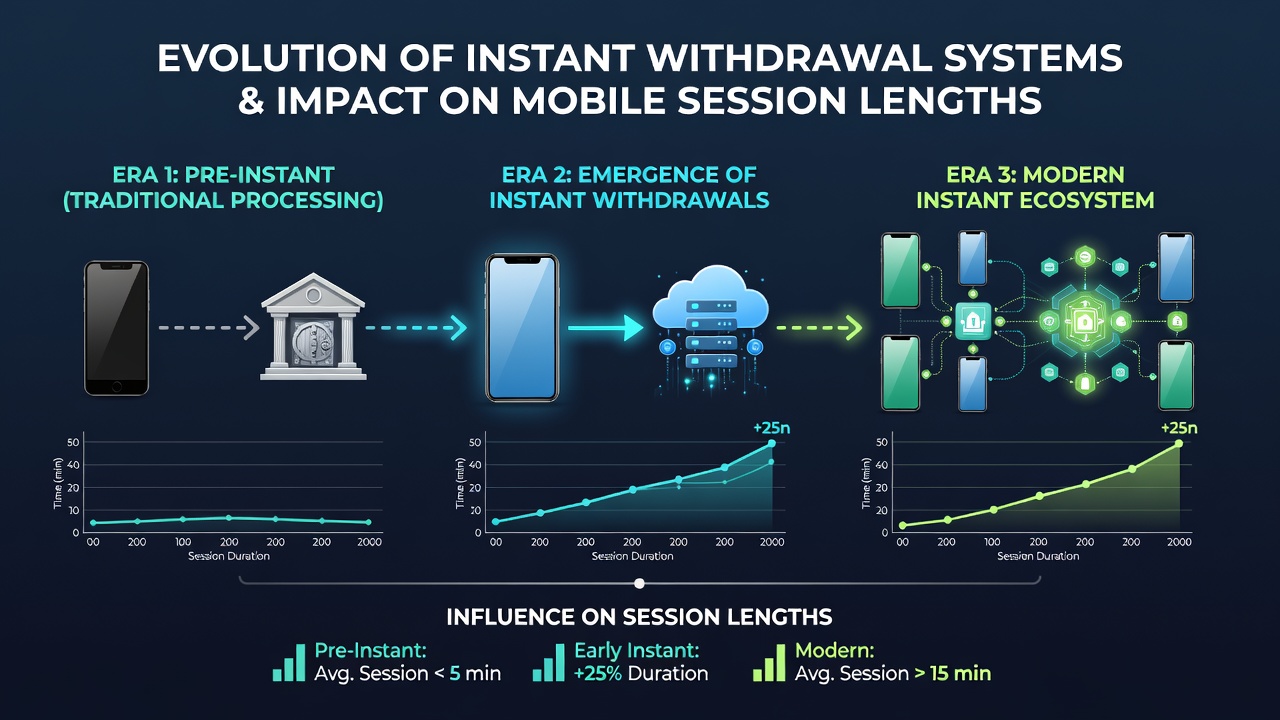
Platform data collected between 2023 and 2025 demonstrates a clear correlation between instant withdrawal availability and session length patterns. Sessions in environments offering sub-minute cash-outs averaged 12 to 18 minutes longer than those limited to next-day processing, although the increase plateaued once players became accustomed to the feature. Analysts attribute part of this extension to reduced decision friction, since users no longer paused to evaluate external transfer delays.
Yet the same datasets reveal that some segments shortened their play windows once instant access removed the psychological barrier of locked funds. Players who previously committed to longer sessions to avoid repeated deposit fees now completed shorter, more frequent visits because they could exit and retrieve winnings immediately. A report issued in July 2026 by an Australian gambling research center documented this bifurcation, noting divergent trends across age groups and device types.
Regulatory and Infrastructure Influences
Government agencies outside the UK, including those in Nevada and several Australian states, introduced updated technical standards for instant withdrawal security during 2024 and 2025. These standards emphasized encryption requirements and transaction logging that operators had to implement before offering the feature on mobile roulette products. Compliance timelines forced several platforms to delay rollouts, creating temporary regional differences in session length statistics.
Industry organizations tracking global mobile gambling reported that infrastructure upgrades, particularly 5G network expansion, further supported real-time processing by reducing latency during peak hours. This technical backbone allowed roulette apps to maintain stable connections while simultaneously handling withdrawal requests without interrupting live table feeds.
Conclusion
The progression from delayed bank transfers to near-instant withdrawals has produced measurable shifts in how long users remain engaged with mobile roulette. Platform metrics, academic studies, and regulatory filings together illustrate that both extensions and contractions in session lengths have occurred depending on user behavior patterns and regional infrastructure. Continued development of settlement technologies and open finance frameworks will likely sustain these dynamics into subsequent years.